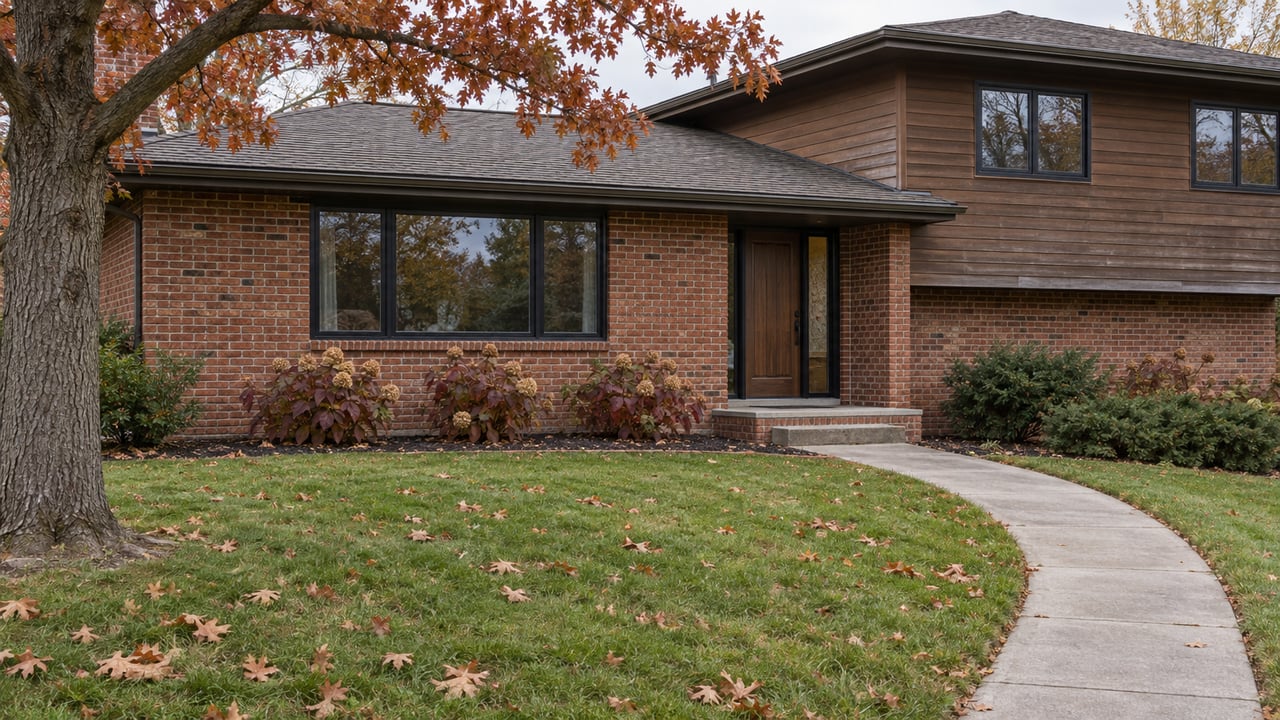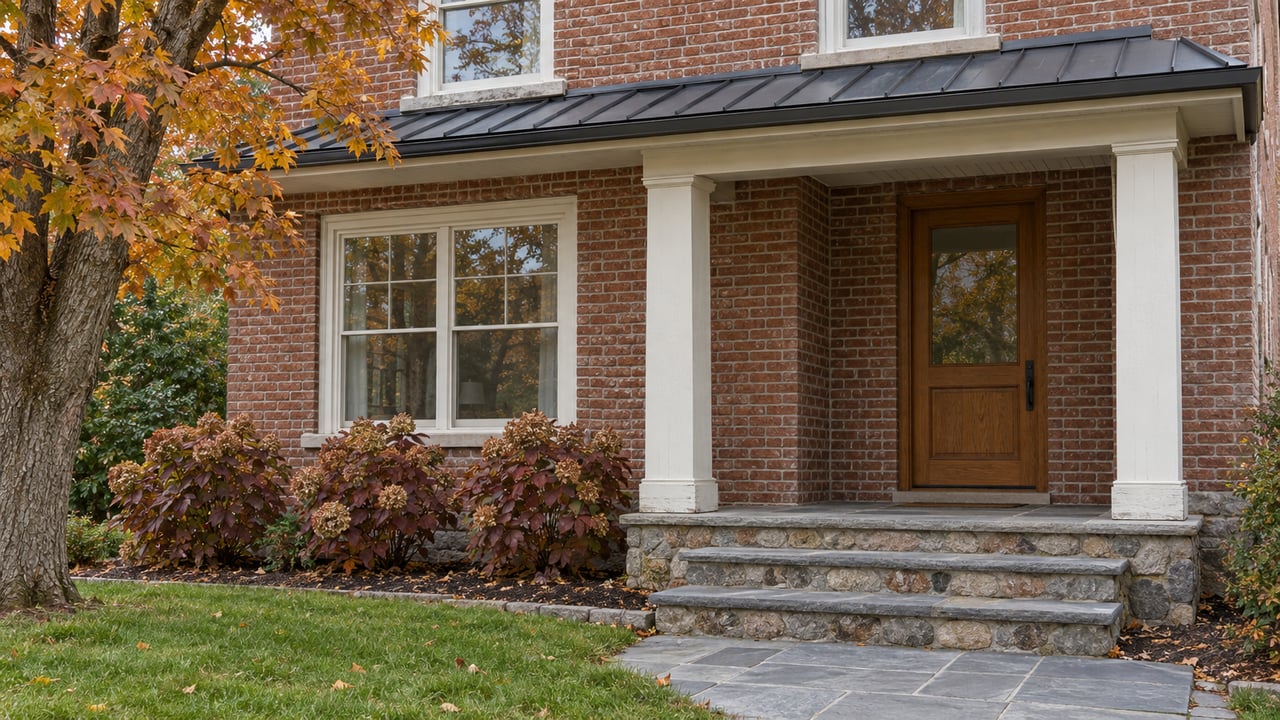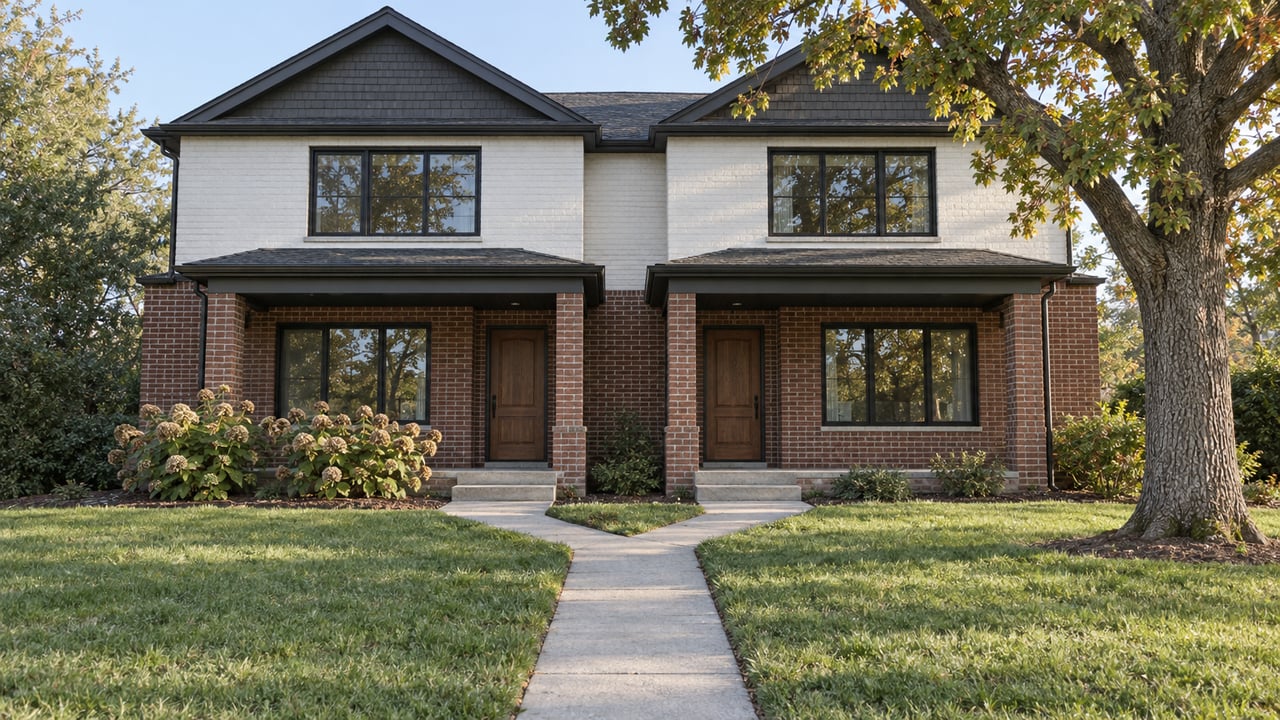
When the duplex at 2129 N. Troy Street in North Highlands came up for showings in May 2025, the listing showed 2,470 square feet and an asking price of $1,795,000. The land records also held a notice that no listing photo would show. According to ARLnow, a circuit court judge had ordered it placed on Expanded Housing Option properties, and it read in part:
"To potential purchasers, please be advised that a lawsuit is on appeal to the Court of Appeals of Virginia and then perhaps to the Supreme Court of Virginia that may void your zoning rights to this property and may result in your right to live in this property being eliminated."
Barry Seymour, manager for the property owner, told ARLnow he hoped to get the notice removed because he saw it as "a cloud on my title." That home later sold for $1,610,000 in March 2026.
Arlington's "Missing Middle" homes exist, they sell, and they cost far less than a new single-family house. They also cost more per square foot, there are very few of them, and the reason there are so few is the same lawsuit that put that sentence in the land records. If you're shopping for one, read the legal paperwork as closely as the price.
The Paperwork Comes Before the Price
According to Arlington County's EHO trial and appeal information, the notice came from the judge's partial stay in 2024. Holders of the 45 EHO permits approved before the September 27, 2024 ruling could keep building only if they recorded it. Real estate development lawyer William Barnes Lawson told ARLnow that the order "seemed to immediately make every builder with permits a necessary party." That idea became the procedural question the case still turns on.
The sources I reviewed don't say whether any particular notice is still on record after the September 2025 appeals ruling. So whether one is attached to a specific address is a question for that property's title work, not something to assume either way. Three other pieces of paper matter here:
- The EHO zoning permit. County staff say this permit does not authorize construction. A separate building permit is still required.
- A vested-rights ruling, if one exists. As Arlington Magazine explains, vested rights let an owner finish an approved project even if the zoning changes later. Classic Cottages won them for four sites in May 2025. Developer J. Alex Wilson told ARLnow in August 2026 that a separate ruling protected his projects at 5041 and 5043 25th Street S. and at 1223, 1225 and 1227 N. Quincy Street.
- The subdivision plat. According to Arlington County's annual EHO report, semidetached homes and townhouses need plat approval before the building permit review even starts.
None of this is legal advice, and a real estate attorney is the right person to read your title commitment. Local reporting hasn't documented a lender or title insurer turning down an EHO deal. Still, knowing which of these documents exist for a given address is basic homework.
The Count After Two and a Half Years
The county's annual EHO report, published in March 2026 and covering July 2023 through December 2025, counted 47 properties with EHO zoning permits and 190 approved units. Here's what had happened to those 47 permits by the end of 2025:
| Status of the 47 EHO permits | Properties |
|---|---|
| Completed as EHO | 3 |
| Under construction as EHO | 5 |
| Switched to single detached, completed | 7 |
| Switched to single detached, under construction | 8 |
| Demolition only | 3 |
| No activity | 21 |
So more permit holders went back to single-family houses than built what they had permits for. The county figures 57 approved units won't be built because of those switches. The completed EHO projects added up to six homes, all two-unit buildings.
Activity has kept going in 2026, slowly. The county's quarterly tracking report logged six EHO permits for 22 units and one six-unit completion from January through March. From April through June it logged three approvals for eight units and construction starts on two projects totaling six units. The same report's list of projects under construction as of June 30 includes the three-unit project at 1225 N. Quincy Street.
The permits are scattered across 25 civic associations, and 79% sit within three-quarters of a mile of a Metro station or half a mile of a premium transit stop on Columbia Pike or Richmond Highway. For a buyer, that means a handful of units in neighborhoods all over the county, not a cluster you can tour in one afternoon.
Why So Many Builders Switched Back
The legal limbo cost builders money every month. David Tracy, president of Classic Cottages, told Arlington Magazine that once the ordinance was paused, builders kept paying real estate taxes, insurance and payroll. His company switched every EHO site that didn't have a permit yet, plus three that did, to single-family homes.
Wilson laid out the economics just as plainly. By the time a developer pays $1 million for a lot and $60,000 to $80,000 in permits, he said, the margin is slim. "I would need to build a $2.8 million single-family house to make it worth it," he told the magazine in June 2025. Splitting the same lot into smaller homes reaches more buyers, which is the whole idea behind EHO. But that only works if the project can be finished and sold. In August 2026 he told ARLnow, "I haven't taken on any new EHO projects because it's still all up in the air."
County staff list several reasons for the low number of building permits beyond the lawsuit itself:
- Builders were reluctant to start construction while the case was pending.
- The separate EHO zoning permit adds a step.
- Semidetached homes and townhouses need subdivision plat approval.
- Buildings with four or more units fall under the commercial building code, which is new territory for builders used to residential work.
That last point helps explain why every completed EHO project so far has been a two-unit building.
What $1.6 Million Buys Here
Here are the sales local reporting has confirmed:
| Address | Neighborhood | Reported sale |
|---|---|---|
| 2127 N. Troy Street | North Highlands | $1,615,000, December 2025 |
| 2129 N. Troy Street | North Highlands | $1,610,000, March 2026 |
| 5041 25th Street S. | Claremont | about $1.2 million, reported August 2026 |
| 5043 25th Street S. | Claremont | about $1.2 million, reported August 2026 |
The county's report puts the first EHO sale, a four-bedroom semidetached home in ZIP code 22201 at $1.6 million, 45% below the average price of a newly built single detached house in that ZIP. The 2026 assessments tell a similar story. Completed but unsold EHO units were assessed between $966,800 in 22206 and $1.4 million in 22201. New single detached homes ranged from $1.3 million to $4.3 million and averaged $2.4 million.
Space changes the picture. The average approved EHO unit is 1,649 square feet, while the average new single detached home is 5,348. At $1,610,000 for 2,470 square feet, the 2129 N. Troy sale works out to roughly $650 a square foot. A new single detached house in 22201 at the price the county's 45% figure implies, about $2.9 million, spread over the countywide average size, comes to roughly $545 a square foot. That mixes a ZIP-level price with a countywide size, so treat it as a rough guide, not an appraisal. It does show which way the gap runs. EHO buyers spend less in total and get much less space, at a higher price per foot.
When weighing a three- or four-bedroom EHO unit against an older detached house nearby, the per-foot number matters. Most EHO units are three-bedroom homes, and most new single detached homes have five bedrooms. The choice isn't really "cheaper new home" versus "pricier new home." You're comparing a new, right-sized home in a close-in neighborhood with whatever an existing house nearby offers for similar money.
Where the Court Case Stands This Fall
- September 27, 2024. Arlington Circuit Court voids EHO and bars new permits.
- June 24, 2025. The Court of Appeals reverses on a procedural ground, finding that Wilsons Ventures should have been part of the case.
- July 2025. The panel withdraws that decision to reconsider it.
- September 5, 2025. The appeals court reverses again, and the county starts accepting new EHO applications on October 1, 2025.
- May 19, 2026. The Virginia Supreme Court agrees to review the procedural question. County spokesperson Erika Moore says the order "did not halt EHO development."
- August 2026. ARLnow reports oral argument is expected this fall and that Wilson's attorney said they would not file a response brief.
So far, only the circuit court has ruled on whether the ordinance itself is valid. The most recent local reporting I found, from August 2026, gave no argument date and reported no final ruling.
A Few Direct Questions
Are the new Bluemont townhouses on N. Burlington Street Missing Middle homes? No. Two of the three townhomes on the 800 block of N. Burlington Street were listed at $1,899,000 in August 2026, but the lot was already zoned for a duplex, so they don't rely on EHO.
Is the county still taking EHO applications? Yes. Its May 20, 2026 update says staff will keep processing applications under the 2023 ordinance.
Has the County Board passed a new version of EHO? I didn't find one. The county's list of zoning amendments through 2025 shows no EHO change, and its May 20, 2026 update says staff continue to follow the ordinance the County Board adopted in 2023.
If one of these few Missing Middle homes is on your list, I'd love to walk through it with you. We can line up the sale history, the per-foot math against older homes nearby, and the permit and title questions to bring to your attorney before you make an offer. Reach out to Kelly Millspaugh Thompson and let's connect.